Step into this online gallery for a glimpse of American life: from the beautifully mundane moments of parenthood to workers on a Ford assembly line and the unrest of the 1960s. We begin with the land itself, and how artists have understood and represented it.
America's Changing Landscape
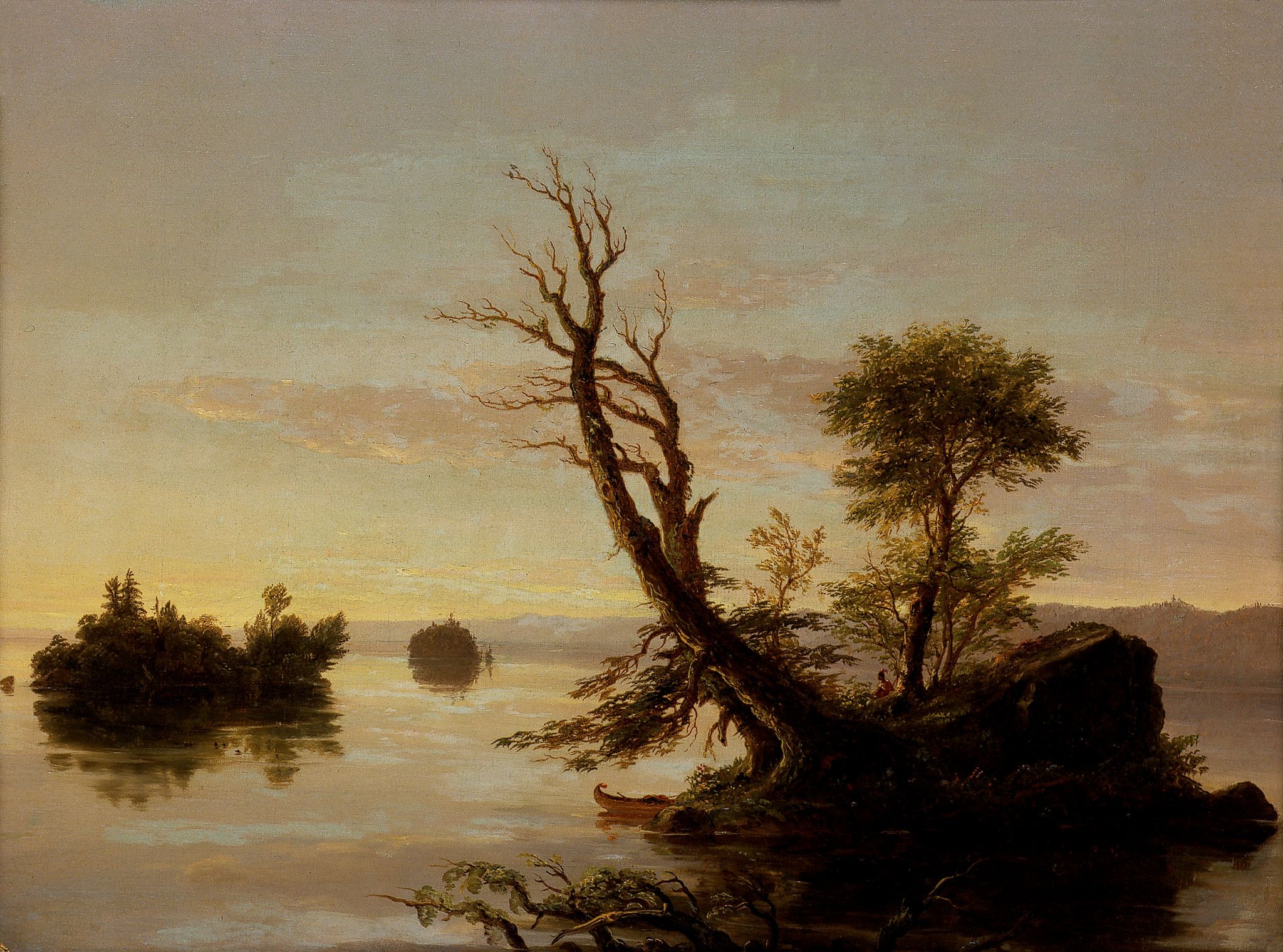
American Lake Scene by Thomas Cole
Thomas Cole painted this scene in 1844. On the island, dying trees, a yellowing sky, and a lone figure in Native American clothing point to a way of life he saw as fading. Cole reflects a widespread belief that Native American cultures were disappearing—an idea reflected in the setting sun and changing landscape.
Cotopaxi by Frederic Edwin Church
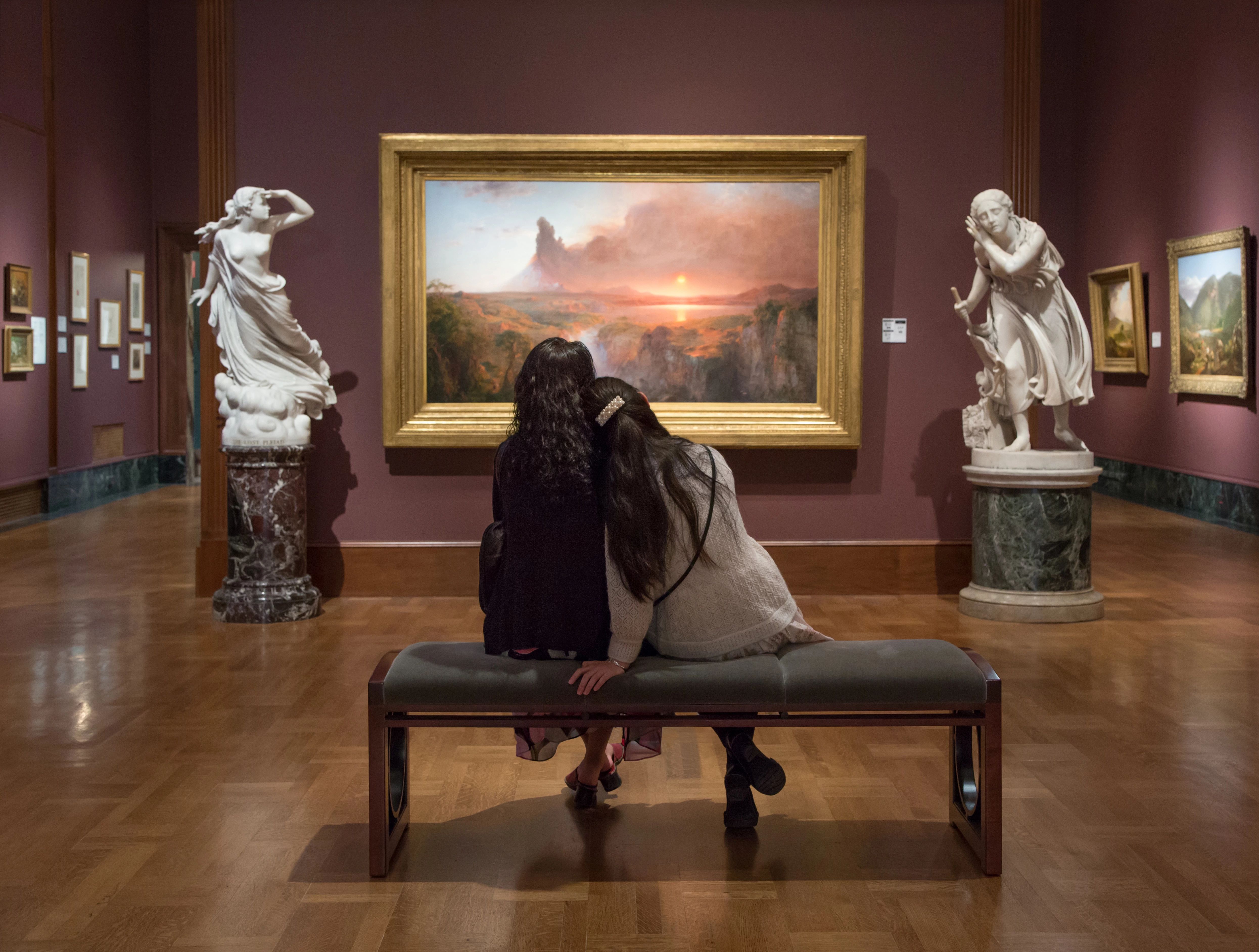
Currently featured in one of our Guests of Honor installations, Cotopaxi depicts a spewing South American volcano with steep cliffs and a rushing waterfall. Artist Frederic Church painted this piece—impressive in both detail and size (about 4-by-7-feet)—in 1862. In addition to a focus on Church’s fascination with geology and scientific research, the painting is also a metaphor of the instability of the United States during the Civil War


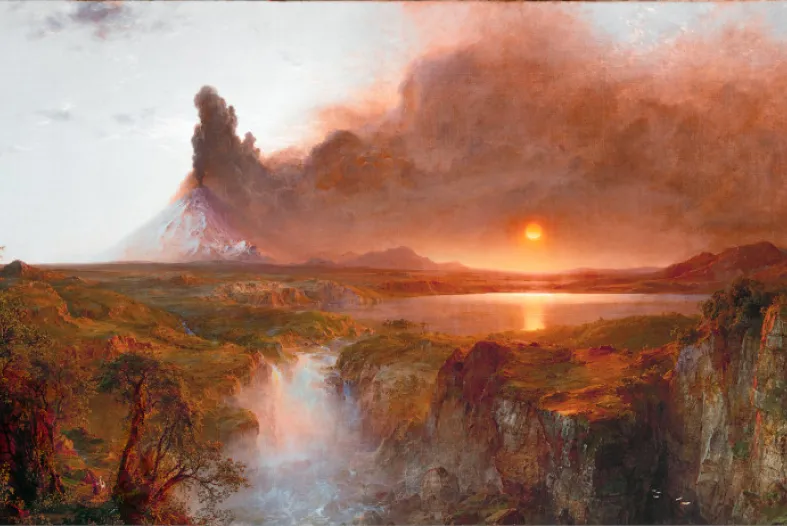
Left: Frederic Edwin Church, Cotopaxi, 1862. Detroit Institute of Arts, Founders Society Purchase, Robert H. Tannahill Foundation Fund, Gibbs-Williams Fund, et al., 76.89
Right: Thomas Cole, American Lake Scene, 1844. Detroit Institute of Arts, Gift of Douglas F. Roby, 56.31
Home and Community
Domestic Happiness by Lilly Martin Spencer
This 1849 painting depicts a husband and wife adoringly gazing at their young children, who are clad in gauzy white and fast asleep. This idyllic domestic scene is a creation of Lilly Martin Spencer, the most successful and influential American woman painter before Mary Cassatt.
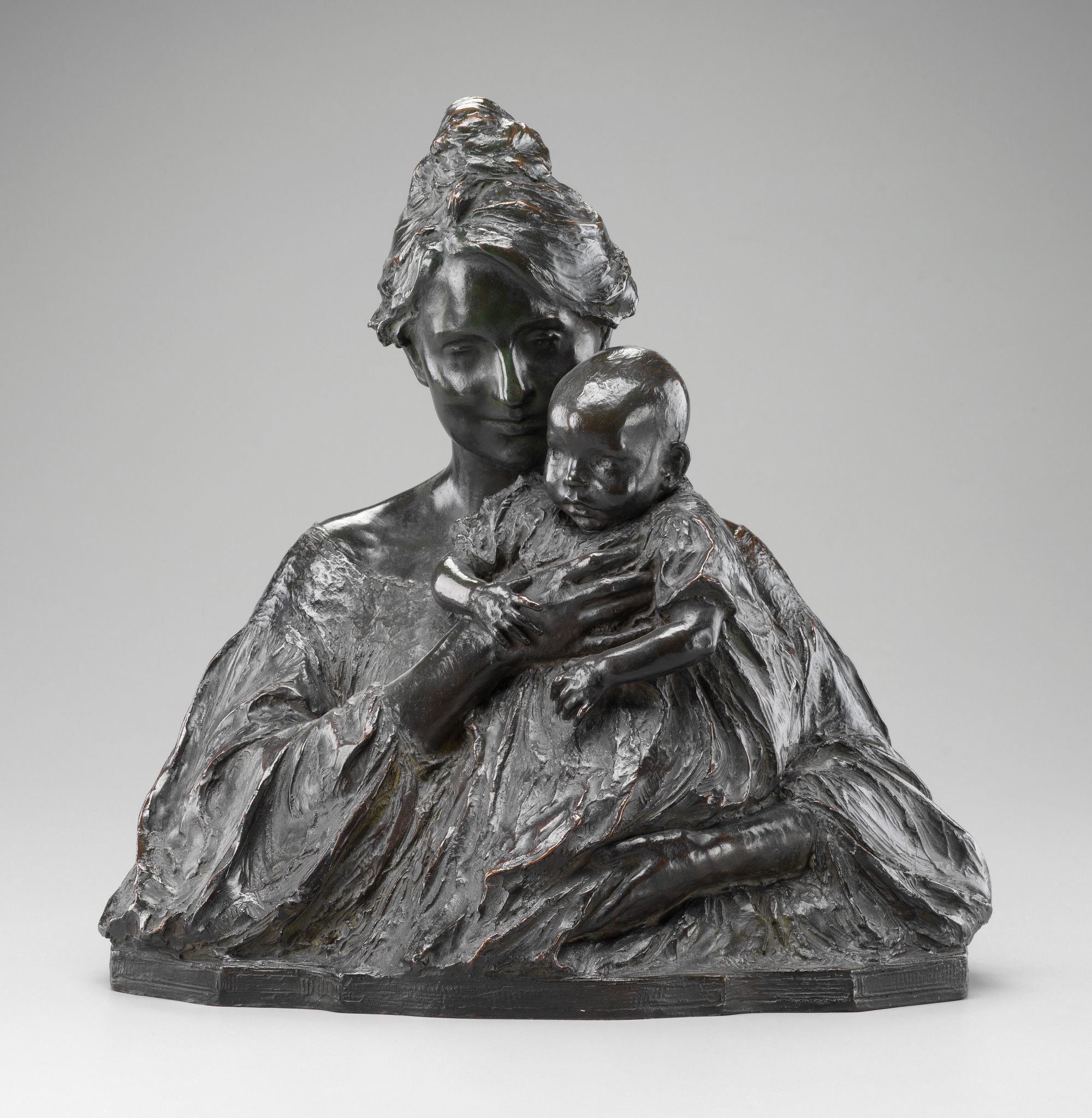
A Modern Madonna by Bessie Potter Vonnoh
Sculptor Bessie Potter Vonnoh’s 1904 piece aimed to “look for beauty in the every-day world, to catch the joy and swing of modern American life.” The title suggests that for the artist a modern woman and child deserved the same artistic reverence as a religious subject did for sculptors in earlier times.



Left: Lilly Martin Spencer, Domestic Happiness, 1849. Detroit Institute of Arts, Bequest of Dr. and Mrs. James Cleland, Jr., 34.274
Right: Bessie Potter Vonnoh; Roman Bronze Works, N.Y., A Modern Madonna, 1904. Detroit Institute of Arts, Gift of Mr. and Mrs. Ralph Harman Booth, 20.9
Who Gets Represented?
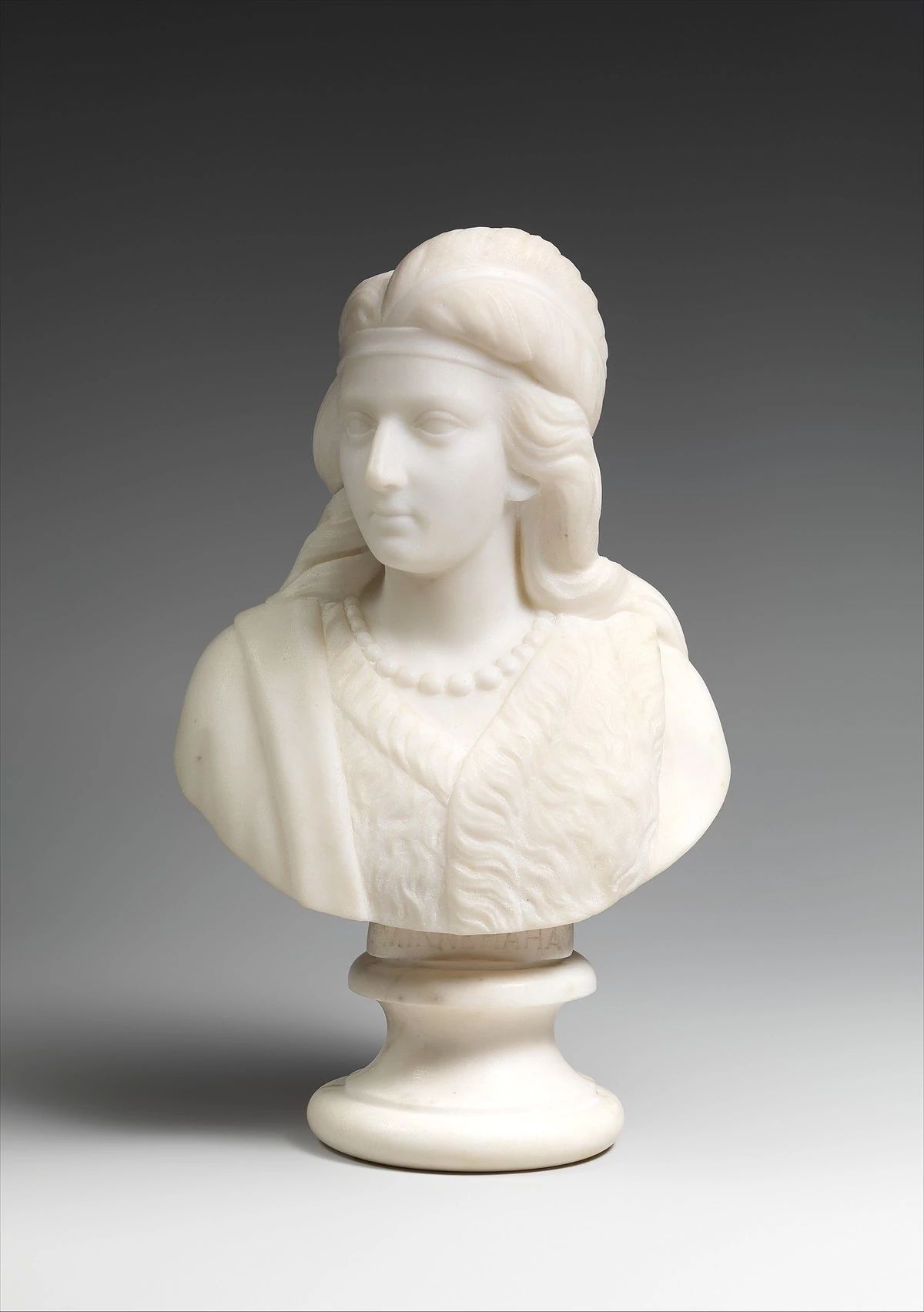
Hiawatha and Minnehaha by Mary Edmonia Lewis
Mary Edmonia Lewis crafted this pair of marble sculptures in 1868, representing the main characters in Henry Wadsworth Longfellow’s epic poem “The Song of Hiawatha.” These sculptures use marble in a neoclassical style, a way in which typically depicted famous white men. Lewis was likely the first artist to depict Native Americans and African Americans in this way.
Shuffle Off to Buffalo #2 by Harry Fonseca
Harry Fonseca places Coyote, a central figure in Maidu beliefs, into a theatrical scene inspired by American popular culture. By reworking familiar imagery in this 1982 artwork, the artist invites a reconsideration of how Native Americans have been represented—and how those stories continue to evolve. (Learn more about Contemporary Native American art here.)


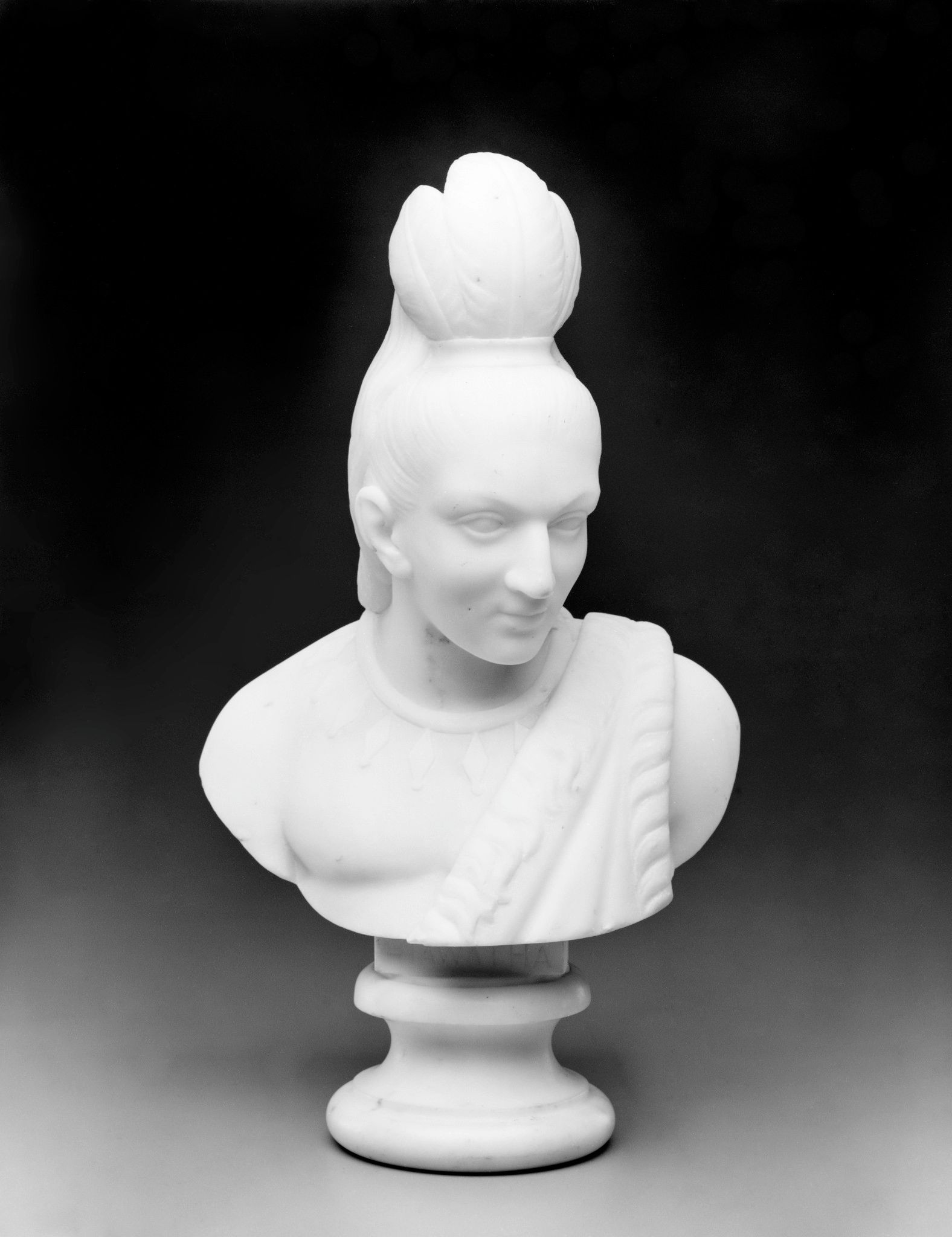
Left: Mary Edmonia Lewis, Hiawatha, 1868. Detroit Institute of Arts, Museum Purchase, Ernest and Rosemarie Kanzler Foundation Fund, 2023.79.1
Right: Mary Edmonia Lewis, Minnehaha, 1868. Detroit Institute of Arts, Museum Purchase, Ernest and Rosemarie Kanzler Foundation Fund, 2023.79.2
Building a Nation
Detroit Industry Murals by Diego Rivera
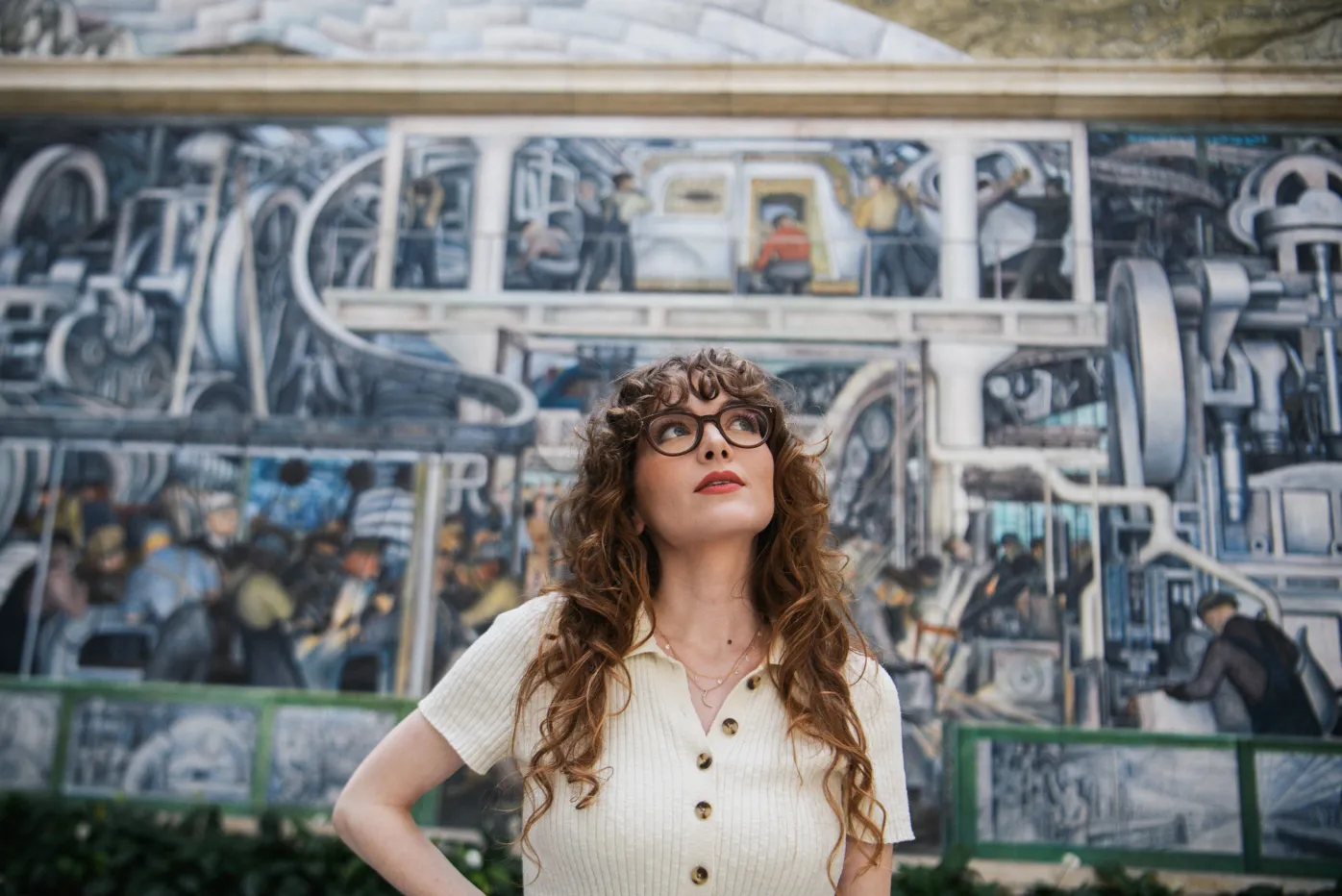
Created with a time-intensive fresco technique by Mexican artist Diego Rivera, these iconic murals are a tribute to the city’s labor force. Rivera completed the Detroit Industry Murals (1932–1933) during the Great Depression when thousands of Detroiters were unemployed, many families went hungry, and workers protested and organized for better wages and treatment. As a Communist, Rivera saw public art as a means of representing and uplifting the working class. While scenes of Ford Motor Company’s River Rouge Complex dominate the North and South Walls, industries such as agriculture, aviation, and pharmaceuticals are also represented in the murals. Learn more here.

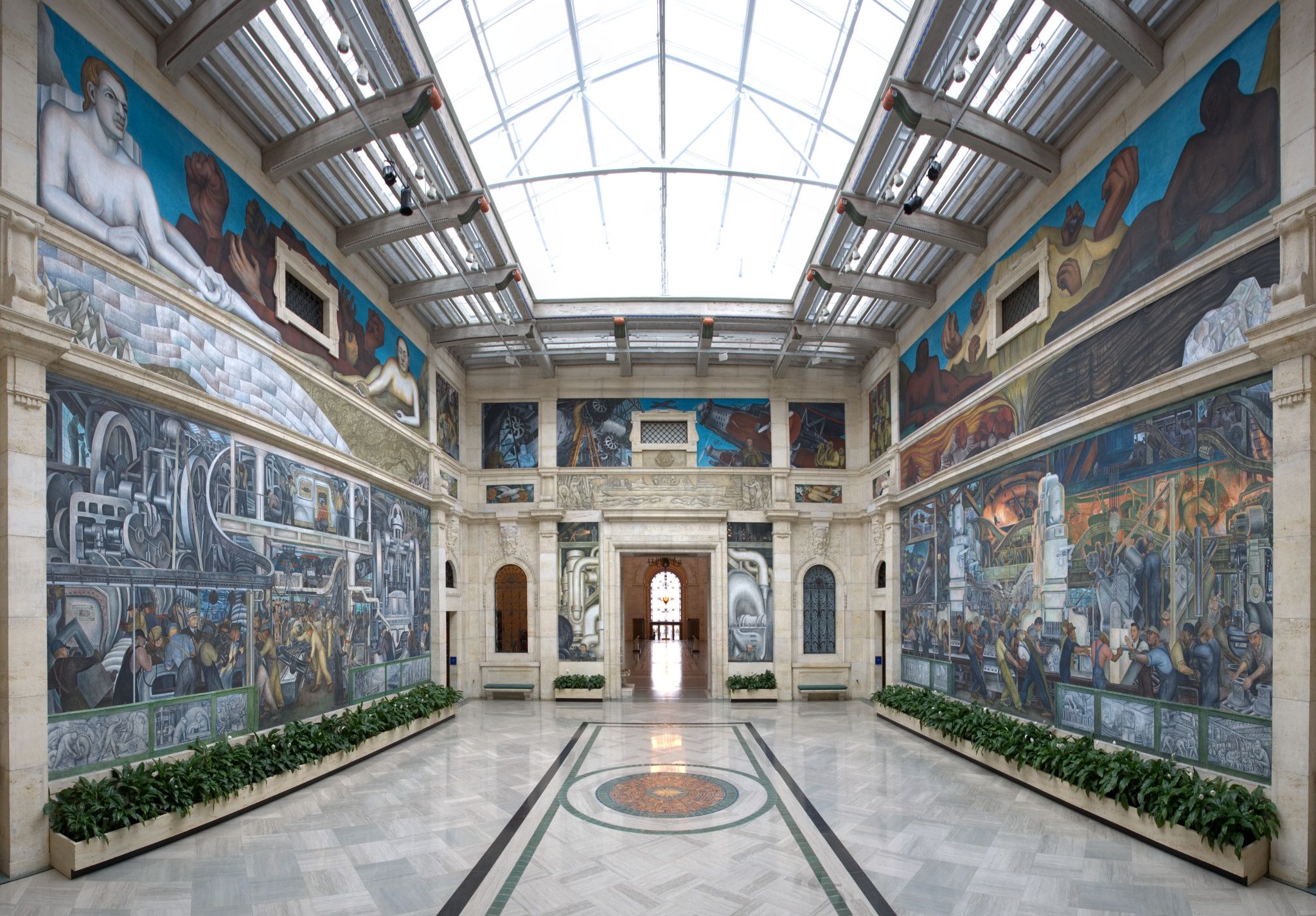
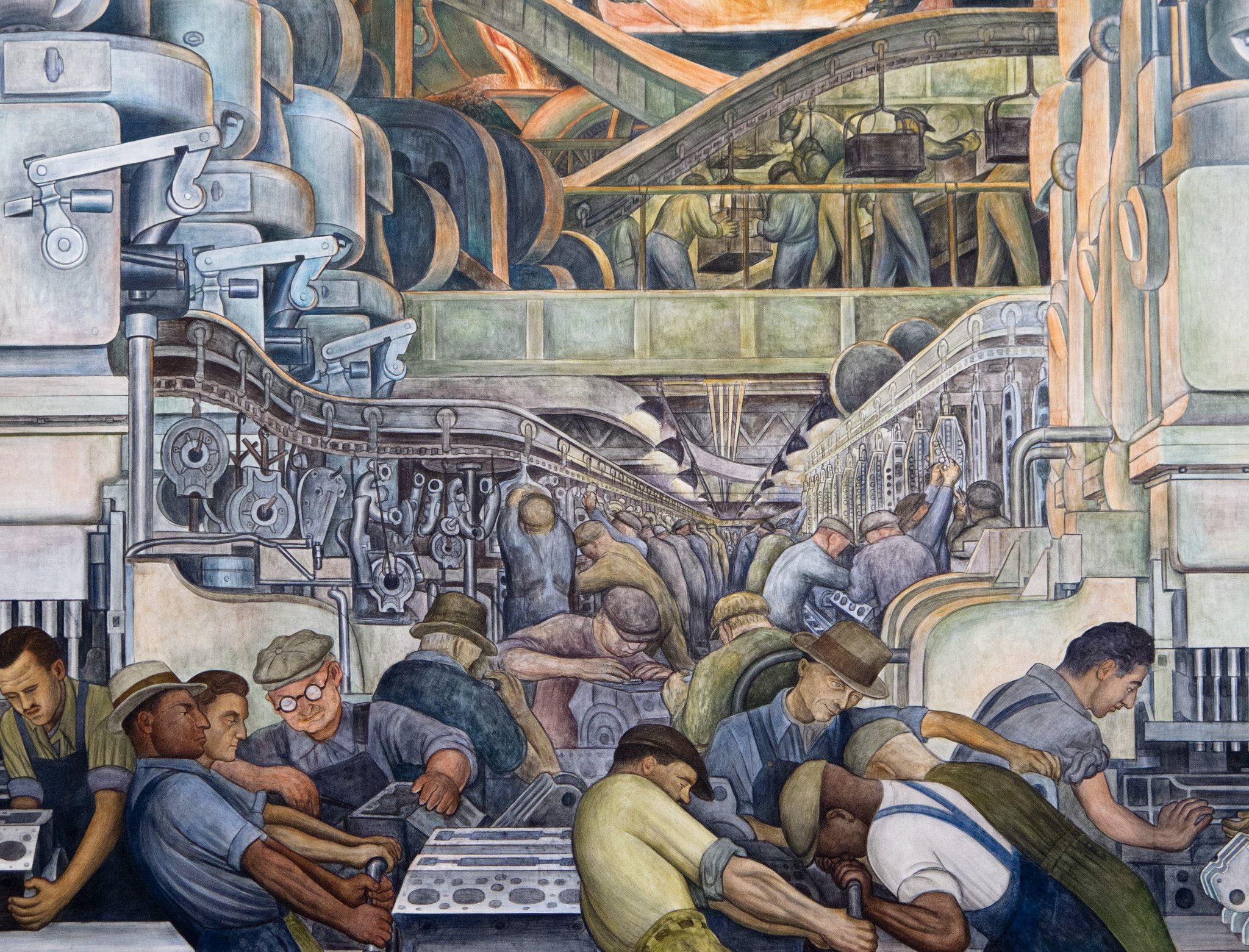
Left: Diego M. Rivera, Detroit Industry, West Wall, 1932-1933. Detroit Institute of Arts, Gift of Edsel B. Ford, 33.10.W
Right: Diego M. Rivera, Detroit Industry, North Wall, 1932-1933. Detroit Institute of Arts, Gift of Edsel B. Ford, 33.10.N
The Ongoing Pursuit of Equality
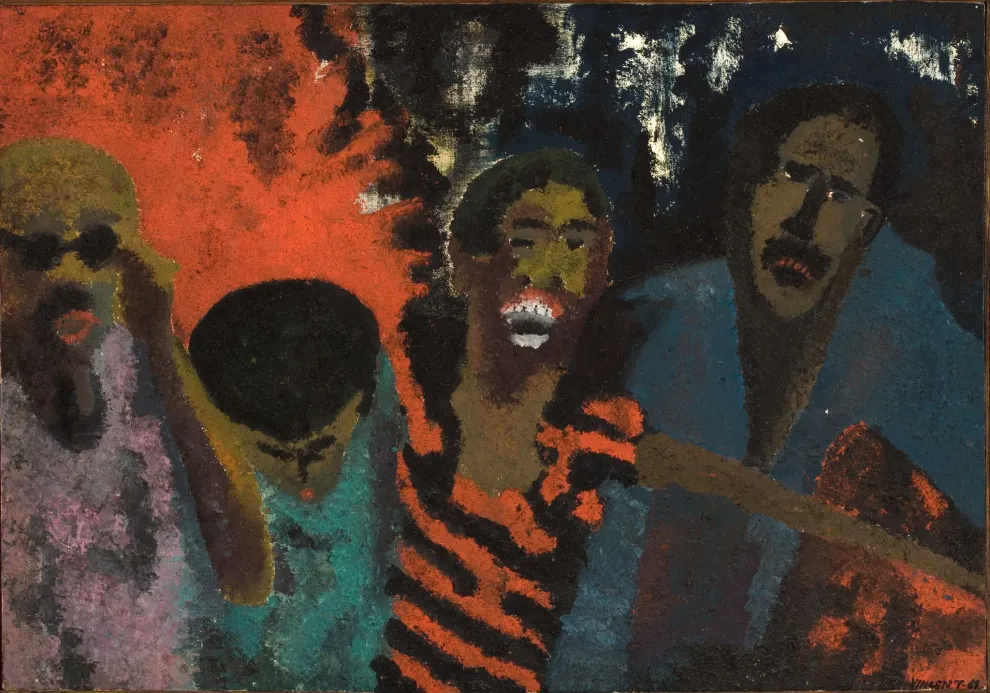
The Fire Next Time by Vincent Smith
This scene depicts one of many rebellions in American cities during the 1960s. In his 1963 book of the same name, James Baldwin predicted this outcome if conditions for African Americans did not improve. This painting was created in 1968, a tumultuous year in America’s history, marked by the assassinations of several civil rights leaders and widespread anti-war demonstrations.


Vincent Smith, The Fire Next Time, 1968. Detroit Institute of Arts, Museum Purchase, W. Hawkins Ferry Fund, 2005.3
A National Symbol Reimagined
Video Flag x by Nam June Paik
This 1985 video installation is a grid of 84 televisions that flicker red, white, and blue to form the stars and stripes of the American flag. Nam June Paik was among the first artists to turn television into an art medium. In this work, the Korean-born artist explores the hidden messages embedded in one of America’s most potent national symbols—the flag—and how television beams these transmissions into our homes during the nightly news.

Expanding the American Story
White on White: Stone Mountain by Tylonn J Sawyer
Detroit artist Tylonn J Sawyer painted this 2019 work as communities across America called for the removal of Confederate monuments from public spaces, reflecting ongoing debates about these symbols and their meanings. Sawyer depicts Stone Mountain Memorial Carving, the largest Confederate monument in the world, looming over the bodies of seven Black men. With this work, Sawyer explores how memories of America’s troubled past continue to haunt our present.
Like many of the works here, Sawyer’s painting reminds us that the story of America is still unfolding. These works offer more than a snapshot of American art—they open up conversations about how the nation has been shaped and redefined over time.
Visit the DIA today to see many of these works up close. And join us later this year for the completely reimagined Modern and Contemporary galleries to view Video Flag x and White on White: Stone Mountain.