All Detroiters are familiar with the Monument to Joe Louis sculpture, commonly known as “The Fist,” a powerful tribute to heavyweight boxing champion Joe Louis. One of the most beloved and frequently viewed works of art in Detroit, the iconic sculpture is impossible to miss at the corner of Jefferson and Woodward Avenues.
But did you know that it’s owned by the Detroit Institute of Arts? The sculpture was created by renowned artist Robert Graham in California in 1986, then gifted to the DIA by Sports Illustrated, and shipped to Detroit, where it was unveiled in its current location downtown.
How exactly does one take care of a 4,000-pound, roughly 25-by-25-foot bronze fist? It’s a group effort. The DIA’s Conservation and Curatorial teams oversee annual maintenance—a two-day process of cleaning and applying protective layers of wax to slow corrosion. Every decade, the stainless-steel cables from which “The Fist” is suspended are replaced.
In fall 2025, the sculpture was due for a cable upgrade, which required a large team of conservators, curators, and riggers. This work was carefully coordinated between different departments at the museum, along with the City of Detroit and the Michigan Department of Transportation.
Phase one involved a team of riggers, a crane operator, and DIA staff working with a 40-ton crane and boom lift. Over the course of a day, the old cables were removed, new ones installed, and the sculpture carefully repositioned and rehung.
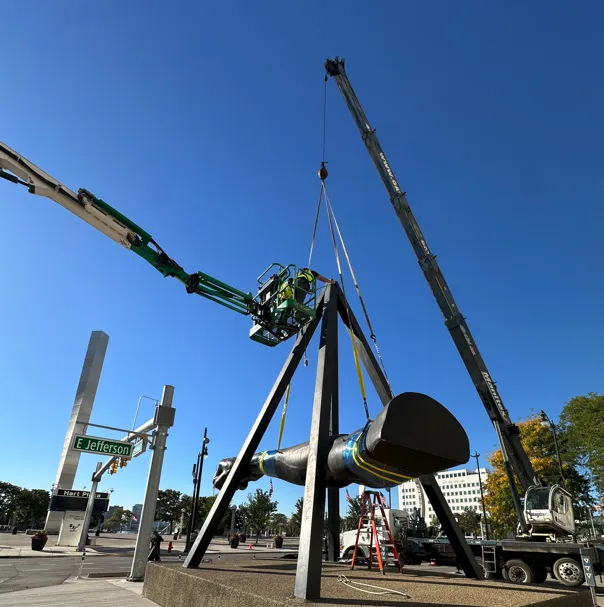
Every 10 years, the 4,000-pound arm is temporarily supported by a crane to allow for a cable upgrade.
Phase two focused on the annual cleaning and coating process, carried out by a team of fine art technicians under the supervision of a DIA conservator. The sculpture was thoroughly rinsed with pressurized water and cleaned using conservation-grade, environmentally friendly detergent.
Once dry, the bronze was gently heated and coated with a layer of wax. After cooling, the surface was buffed to a rich sheen. Zinc letters—hidden beneath layers of pigmented wax—were uncovered and cleaned. The whole sculpture was then coated with another layer of wax and buffed again.
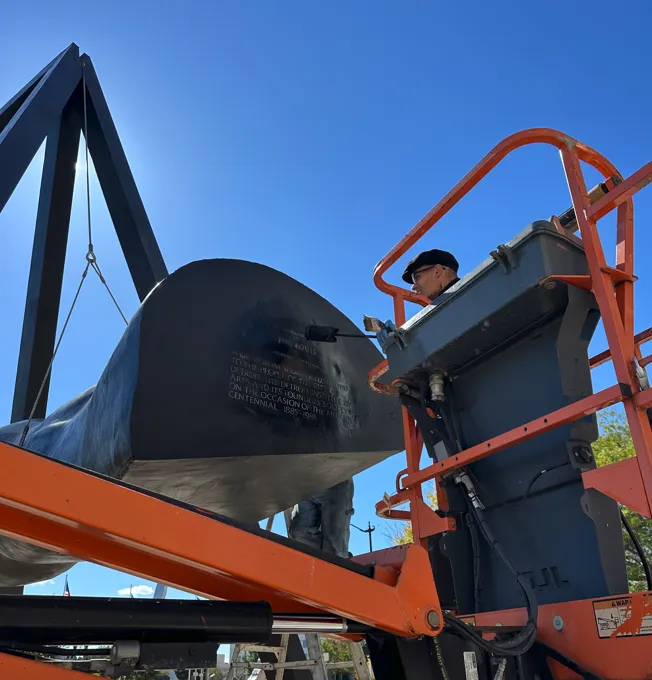
Each year, the bronze is gently heated with a propane torch and coated with a layer of wax.
Replacing cables at the end of their lifespan is one thing—but does all this cleaning and waxing really make a difference? In short, absolutely. Cleaning removes a year’s worth of grime, and waxing helps protect the sculpture’s original black finish. Without regular maintenance, the black surface would gradually turn green, and the artist’s detailed lettering and textures would disappear.
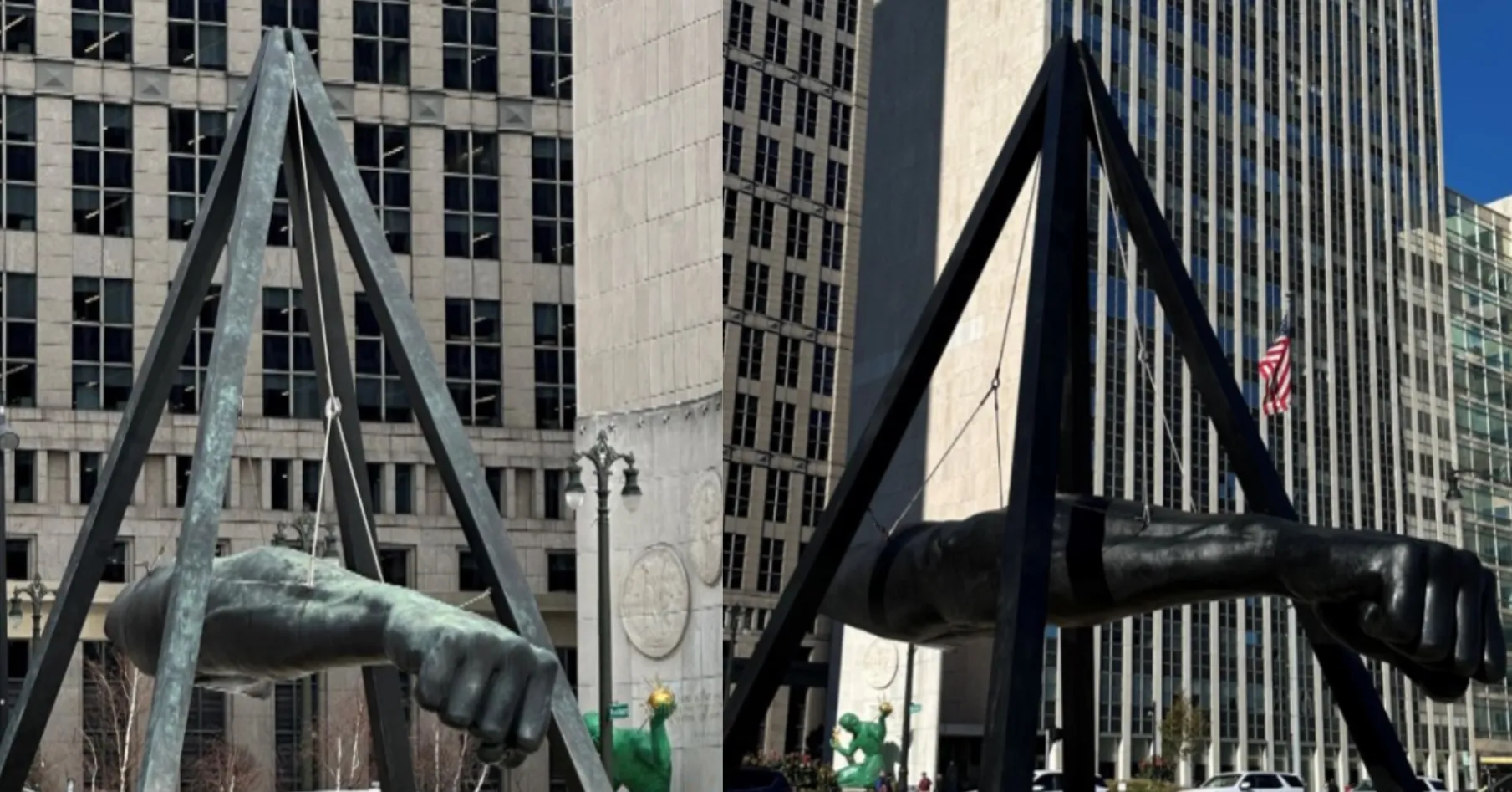
Left: Before treatment (March 2025). Right: After treatment (October 2025)
So next time you’re in Detroit, walk or drive past “The Fist” and admire its glossy surface and precisely aligned cables. Then stop by your DIA to discover more works of art—many of which have spent time in a conservator’s lab for careful cleaning and restoration.