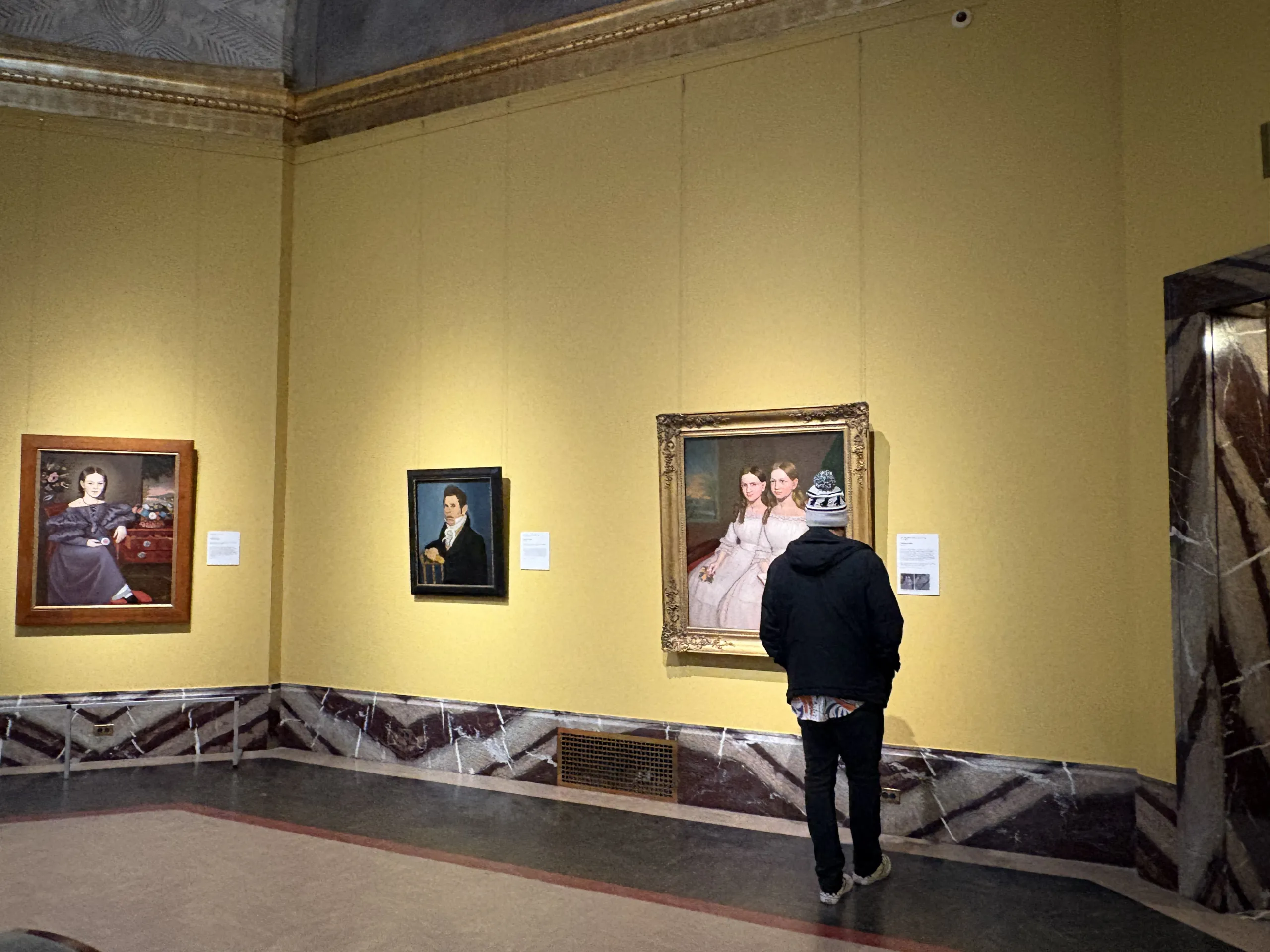
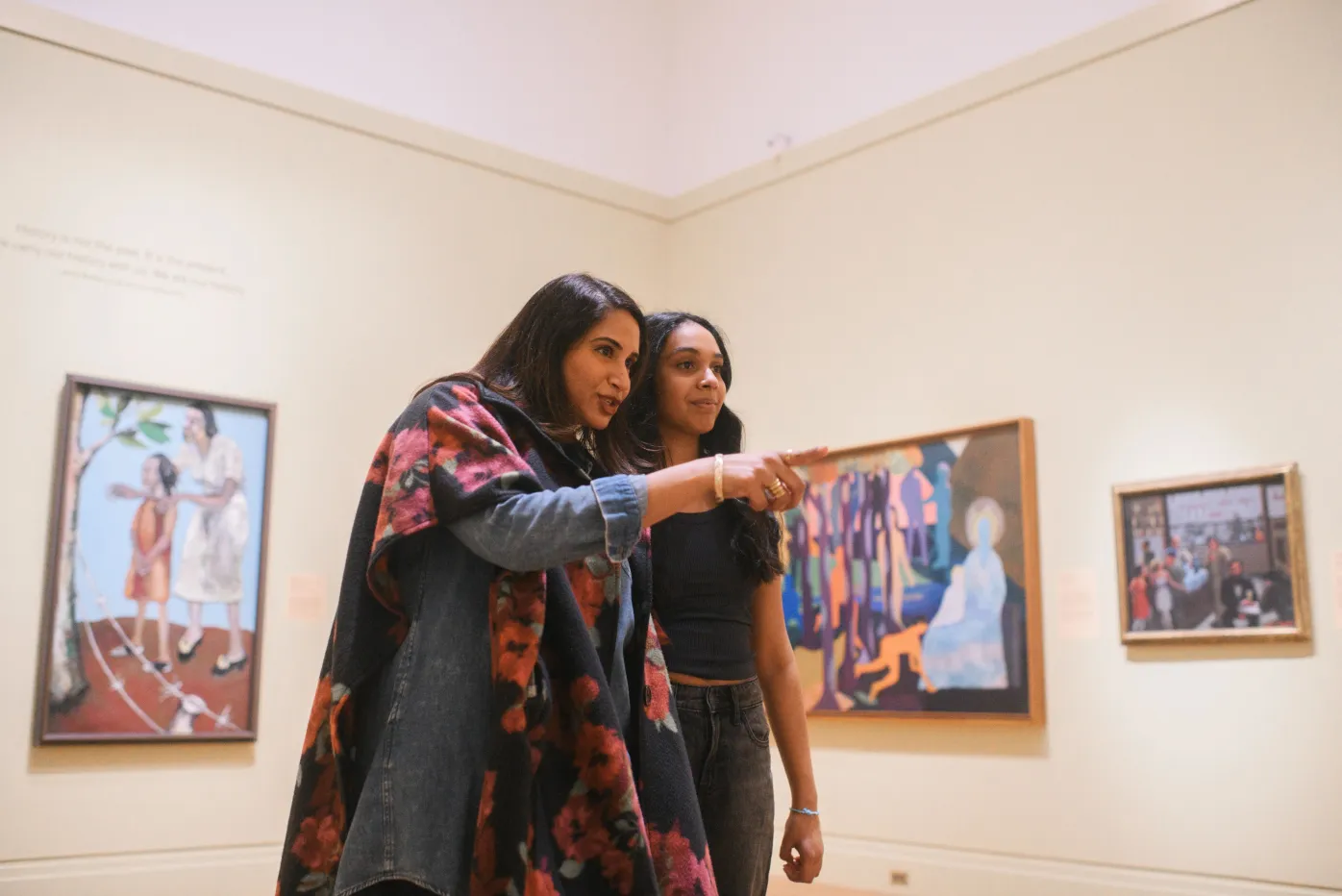
Prior to the 20th century, works like these weren’t recognized by the art world. Many of these artists received no formal training, often learning from friends or neighbors and developing their own distinctive styles. Placing these works in museums allows us to discover new voices within American history.
Join me for a stroll through this new gallery. You’ll notice Wilhelm Schimmel’s wood carving Eagle, created in the late 1860s. A German immigrant who settled in central Pennsylvania, Schimmel created animated, colorful animal sculptures from cast-off household materials. He used everyday tools and supplies such as wood from construction sites, a penknife, and house paint.
Rubens Peale, the creator of Two Ruffled Grouse in Underbrush, comes from a prominent family of artists in the late 18th and early 19th centuries. So, it may seem strange that he’s included in a Folk Art gallery. But he was a scientist, specifically a taxidermist, and didn’t take up painting until the age of 80. He depicted what he knew best: the birds that he preserved for the galleries of the Peale museums in Baltimore and Philadelphia.
Twin brothers John and James Bard depict a steamboat in their 1846 painting The Thomas Powell. The painting acts as a form of advertising by showcasing a peaceful journey on a sunny day—a contrast to concerns about the new technology, such as boiler explosions. A painting like this may have been displayed in a ticket office.
Within the gallery, you’ll notice multiple weathervanes—like Grasshopper Weathervane and Goddess of Liberty Figure Holding a Flag, both handcrafted in Massachusetts. While a simple weathervane would have served the owner’s practical needs, these works of art are not only aesthetically pleasing but also express symbolic meanings: patriotism in the case of Goddess of Liberty and hope for business success in the case of the Grasshopper.
By early April, an assortment of walking sticks will also be on view. Like the weathervanes, these walking sticks from a local private collector are functional objects crafted with great care. Each stick, often made by or for veterans of the US Civil War, tells the story of its owner. You’ll see references to battle sites and patriotic emblems, along with personal stories.
So, just like every piece on view at the DIA, each object in the Folk Art Gallery is much more than a work of art—it's a glimpse into the lives of others. It’s part of our shared history. And the more we learn, the more empathy and compassion we gain for those around us. I invite you to discover extraordinary stories of American history—now on view at your DIA.