The Detroit Institute of Arts houses works representing many religious traditions, yet Jewish ceremonial art has been largely absent from our galleries. Two years ago, we contacted the Jewish Museum in New York—one of the oldest museums of its kind in the world—to begin a conversation about borrowing works from its important collection for display. Those discussions resulted in Guests of Honor: Art of Faith from the Jewish Museum, New York, which debuted late last year and runs through February 2027.
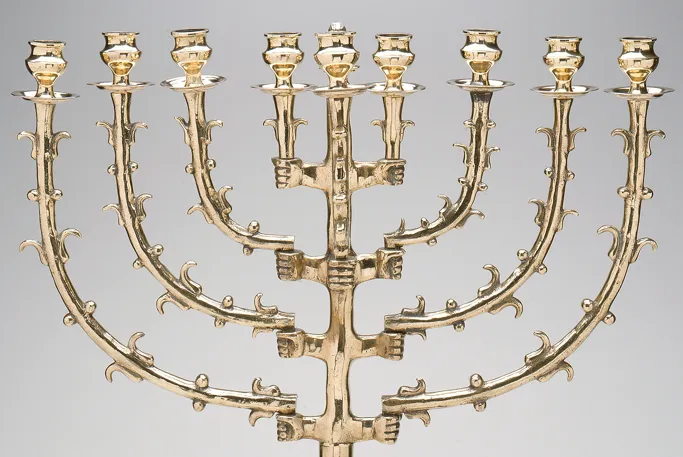
The exhibition brings about a dozen objects dating from the 1400s to the early 1900s into the museum’s galleries. Originating from Europe, North Africa, and the Middle East, these works are installed across four European art galleries and one devoted to the arts of the Islamic world. The objects range from Torah crowns and finials to Hanukkah lamps—pieces that honor Judaism’s holiest text as well as those used in holiday celebrations.
Rather than gathering them in a single space, the works were intentionally placed throughout the museum. Displaying them within our encyclopedic collection shows how Jewish communities have thrived across centuries and continents. It also highlights visual and cultural connections between Jewish, Christian, and Islamic traditions.
In the Islamic galleries, Judaica is presented in ways that highlight shared artistic motifs and reverence for sacred texts. Adornments for the Torah scroll such as a crown and finials are placed near other manuscripts, including a Qur’an, emphasizing the importance of the Torah in Judaism and the Qu’ran in Islam.
Nearby, a Hanukkah lamp features peacocks perched along its surface. These birds—symbols of beauty, paradise, and light—appear across many religious communities in Iraq, including Muslim, Christian, Yazidi, and Jewish traditions. Works like a peacock-shaped Indian incense burner in the same gallery further show how this motif travels across cultures and objects.
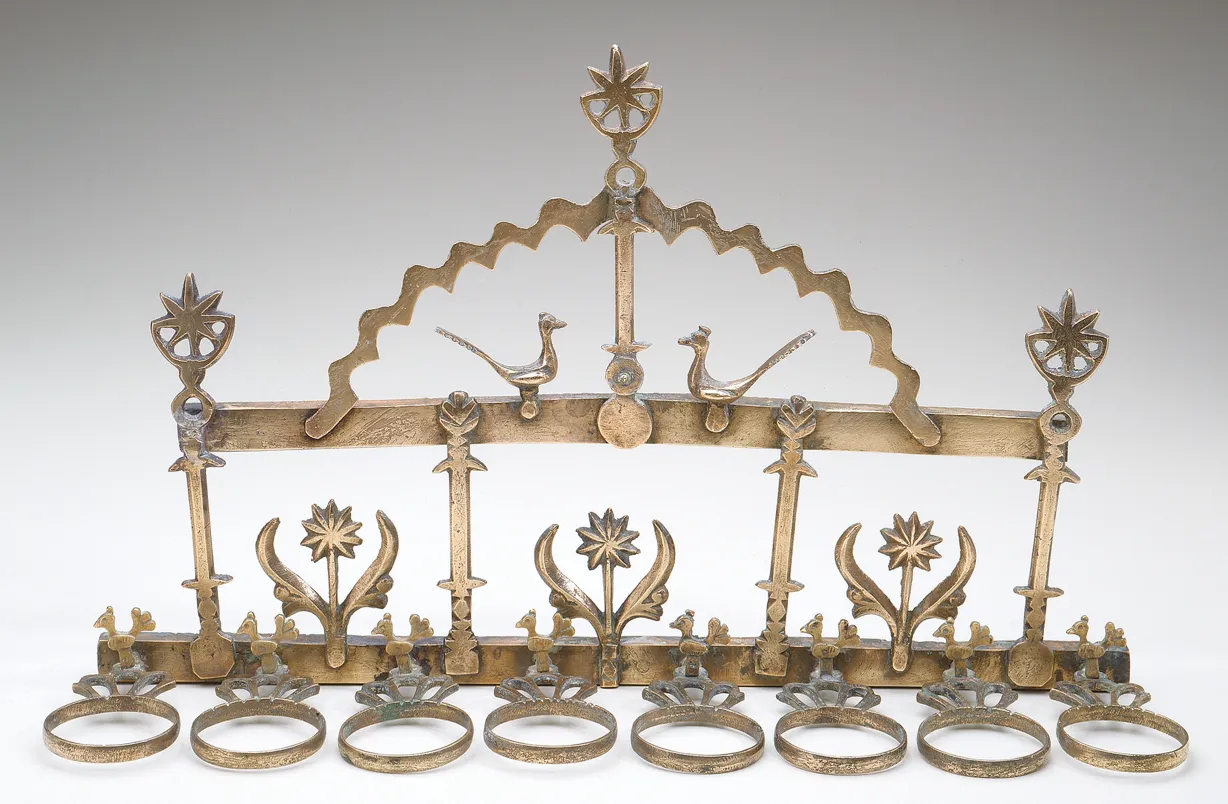
Baghdad, Iraq, Hanukkah Lamp, 1800s–early 1900s. The Jewish Museum, Gift of Dr. Harry G. Friedman
In one of the European galleries, a Torah shield decorated with unicorns, lions, and foliage resembles designs found in Christian silver produced in Nuremberg, Germany, during the same period.
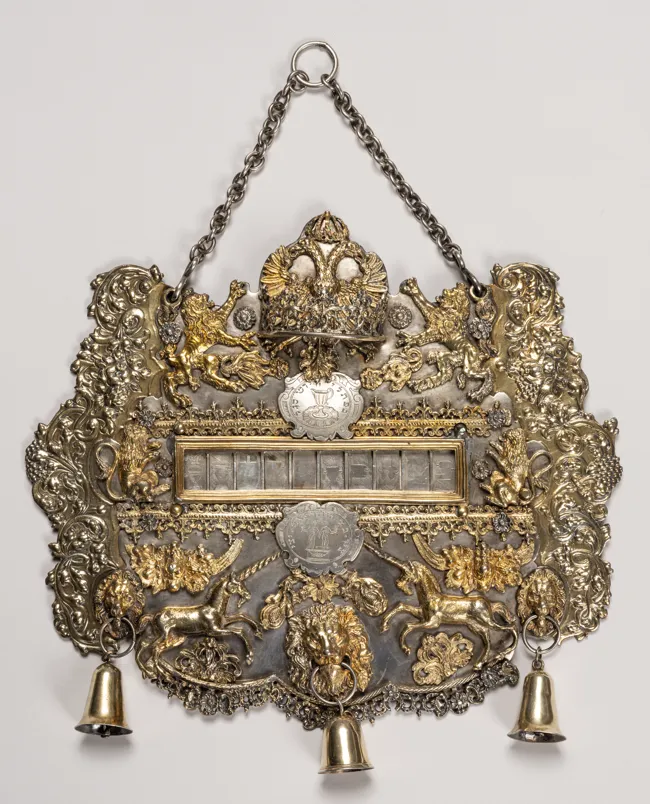
Thomas Ringler, Torah Shield, 1661–1664. The Jewish Museum, Gift of Dr. Harry G. Friedman
Other cross-cultural themes appear as well. A Torah pointer made by an Italian artist incorporates coral, prized for its vibrant color. That same material appears in European portraits as necklaces worn by young girls, where coral was believed to offer protection and good fortune.
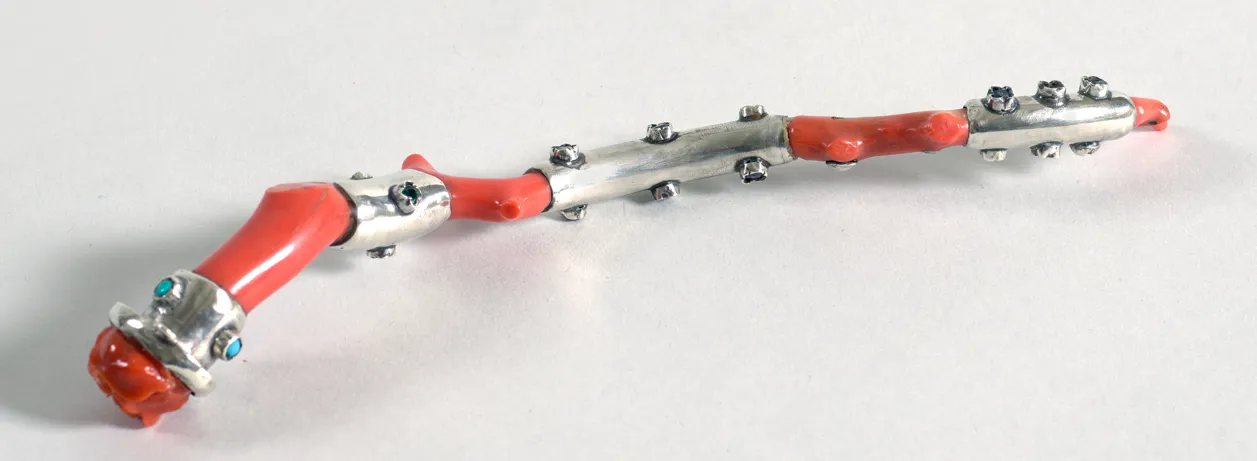
Italy, Torah Pointer, 1700s. The Jewish Museum, Gift of Harry G. Friedman
Together, these objects tell a broader story—not only of Jewish ritual and tradition, but of the connections that link cultures and religions across centuries.
Next time you find yourself at the DIA, I invite you to seek out the Art of Faith objects and discover how these beautifully crafted ceremonial works reflect the places and communities in which they were made.
To locate Art of Faith objects, download the free Bloomberg Connects app.
The exhibition is generously supported by the William Davidson Foundation.