When the Detroit Institute of Arts reinstalled its African American galleries, their location at the very heart of the museum was no coincidence. The galleries bring together centuries of artistic innovation, from the 1800s to today, offering visitors a richer understanding of African American art and its place in American history.
The reinstallation was led by Valerie Mercer, Curator and Head of the DIA’s Center for African American Art. Over the past 25 years, Mercer has helped shape one of the most significant African American art collections in the country—building on the museum’s commitment to collecting this work since the 1940s.
Mercer’s path to this role wasn’t straightforward. Though she studied art history at New York University and Harvard, African American art wasn’t covered in her formal education. It wasn’t until she began her curatorial career at the Studio Museum in Harlem in the 1990s that the field really opened up to her.
In this Q&A, Mercer reflects on visitor responses, recent acquisitions, and why African American art history—long absent from many classrooms—is not new at all, but essential to understanding the story of American art.
In preparation for the African American reinstallation, the DIA hosted focus groups. What moments or comments really stayed with you?
Their reaction to the Thomas Day sofa was surprising to me. They talked about it almost like it was a person. To them, it conveyed safety and comfort. I love the sofa, but I’ve never thought about it quite that way. They were appreciative of the craftsmanship, which is influenced by the revival of classicism, known in the 19th century as neoclassicism.
Thomas Day was a free person of color who learned the trade from his father. In the early 1800s, he moved to North Carolina to open what became one of the largest furniture manufacturers in the state.
The focus groups were also stunned by the beauty of Mary Edmonia Lewis’s work. We showed them one of her two sculptures in the new galleries, Hiawatha and Minnehaha. They were surprised the sculpture was made by a woman of color—she was African American and Native American.
Lewis's sculptures reflect the 19th century revival of the classical style and the use of marble, which typically depicted famous white men. And here she was, in the 19th century, likely the first artist to depict Native Americans and African Americans in marble and in the neoclassical style.
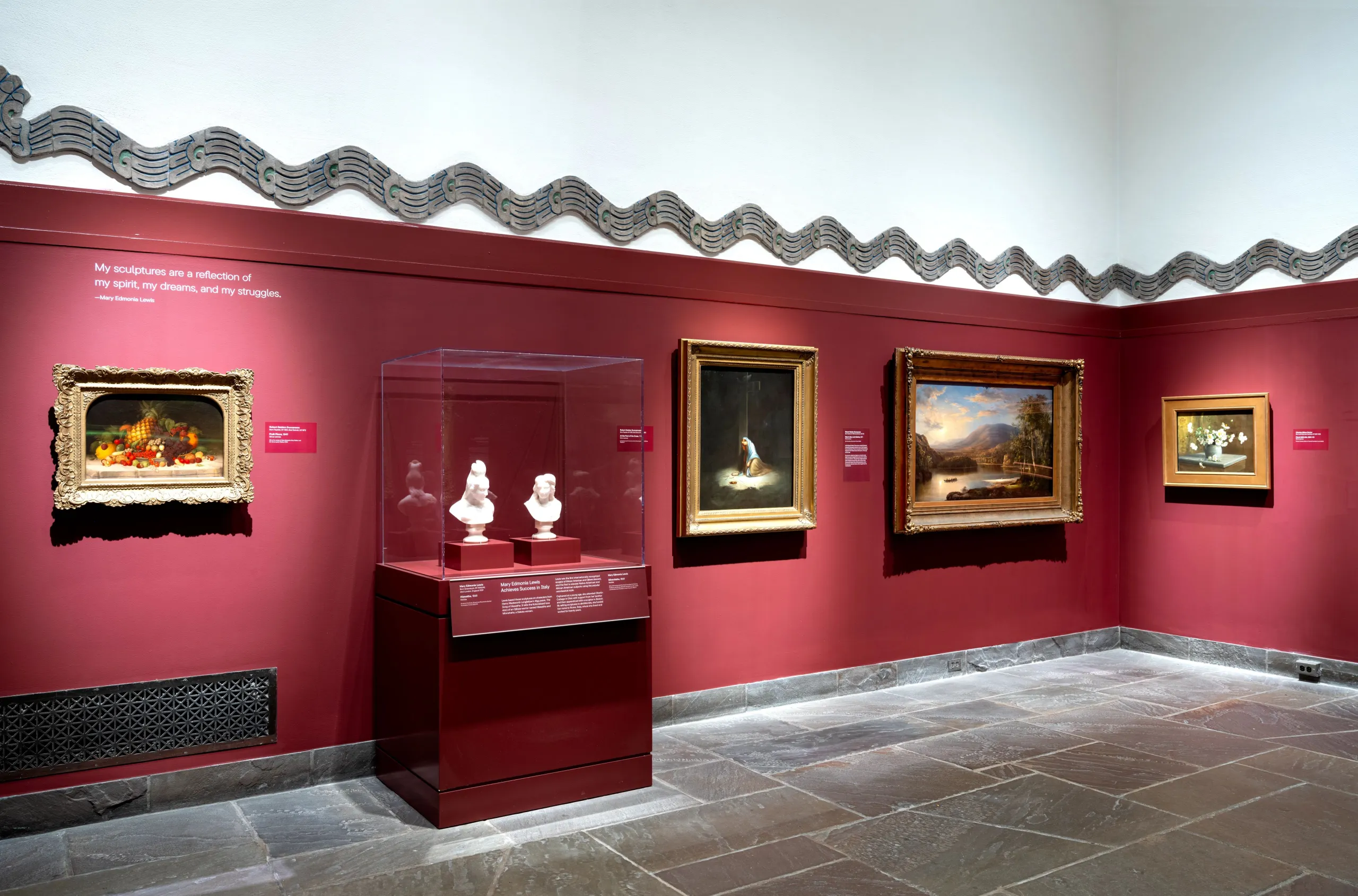
A snapshot of the newly reinstalled African American galleries, featuring Mary Edmonia Lewis's sculptures Hiawatha and Minnehaha
When you look at the reinstalled galleries as a whole, what stories do they tell that might not have been as visible before?
We can tell the story of African American art more seamlessly. Previously, works by 19th century figures like Detroit-based artist Robert S. Duncanson, were on view in the American galleries.
We can also talk in more depth about a variety of artistic movements. The reinstalled galleries cover the Harlem Renaissance, featuring newer acquisitions like prints by painter and illustrator Aaron Douglas, to Social Realism, which includes a number of artists/muralists who were influenced by Diego Rivera—Hale Woodruff, Vertis Hayes, and Charles Alston. Of course we don’t have any of their murals, but you can see Diego’s influence on their paintings. So, it’s convenient to have these artists’ works right next to Rivera Court.
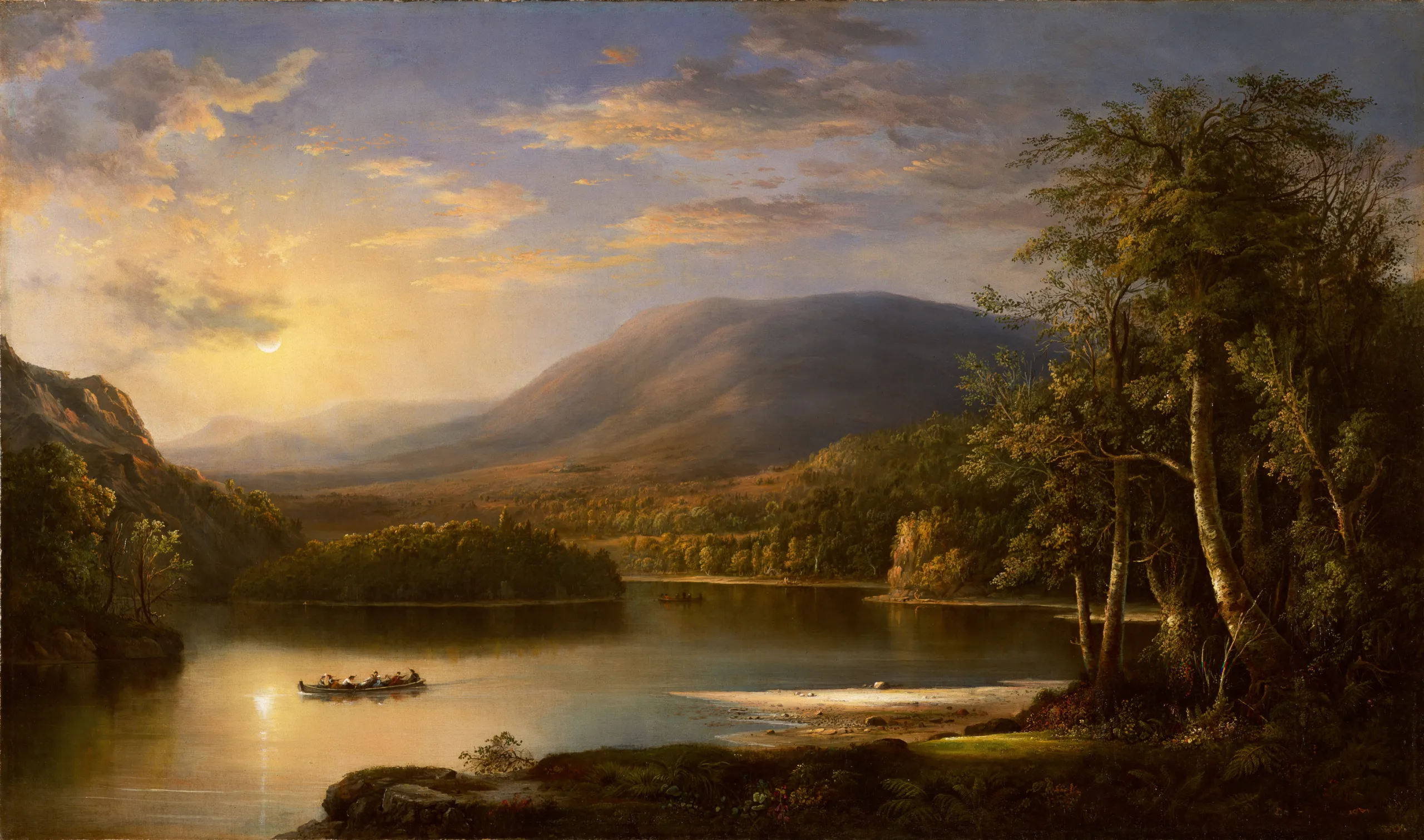
Robert S. Duncanson, Ellen’s Isle, Loch Katrine, 1871. Detroit Institute of Arts, Gift of the Estate of Ralzemond D. Parker
What message does the museum send by placing the African American galleries at the heart of the museum, next to Rivera Court?
The galleries were previously located at the back of the second floor, and people often had trouble finding them. Now, the galleries are in a much more prominent position, and they deserve to be there. Diego Rivera’s Detroit Industry Murals always attract a lot of people, and now those visitors just spill right into the African American galleries from there. We’re letting visitors know that the works within these galleries are important, and we’re providing an opportunity for them to learn about African American art as soon as they enter the museum.
The new galleries include some outstanding examples of abstract art. Talk about why these artists were drawn to abstraction and how abstract art is part of African American art history.
People practice abstraction for all kinds of reasons. Abstract artists experiment with colors, forms, and shapes. They're not always interested in narratives. They move away from traditional subjects. The same thing happens in poetry and literature. They’re really inventing their own visual language.
I love abstraction; it’s part of African American art history—from the 1950s thru the 1980s, from Charles Alston to Alvin Loving. When artists went to school in the 1950s, abstraction was “the thing.” They were being taught by star abstract artists like Joseph Albers at Yale. Artists couldn't come out of school without producing hard-edge minimalist work, with an emphasis on geometric shapes and bold colors.
During the 1960s and 1970s, artists like Bob Thompson were still creating figurative work but doing it in a new way. Thompson used color as a dominant aspect of his work, with human figures painted in non-local colors like orange people.
Then there's the innovative abstract expressionist Sam Gilliam. Art critics of the 1970s credited him with saving American painting, especially because he merged painting with sculpture. You can see this in his work, Gram, on view in the new galleries.
The beautiful painting Maple Red by Edward Clark, a second-generation abstract expressionist, is also in our new galleries. Ed Clark once said to me: "People were telling me that I was doing that white boy stuff.”
A lot of people think abstraction is something alien to non-western cultures, but it's just not so. For example, several African cultures have had traditions of abstraction, such as the Ndebele (South Africa), Dogon (Mali), Chokwe (Angola/Democratic Republic of the Congo), Yoruba (Nigeria), and Dan (Liberia/Côte d’Ivoire), just like they have created stylized realistic forms in various media to convey a wide range of spiritual and symbolic functions and meanings. Abstraction is actually another natural form of expression for the creative spirit, but we don’t often teach African Art in America.
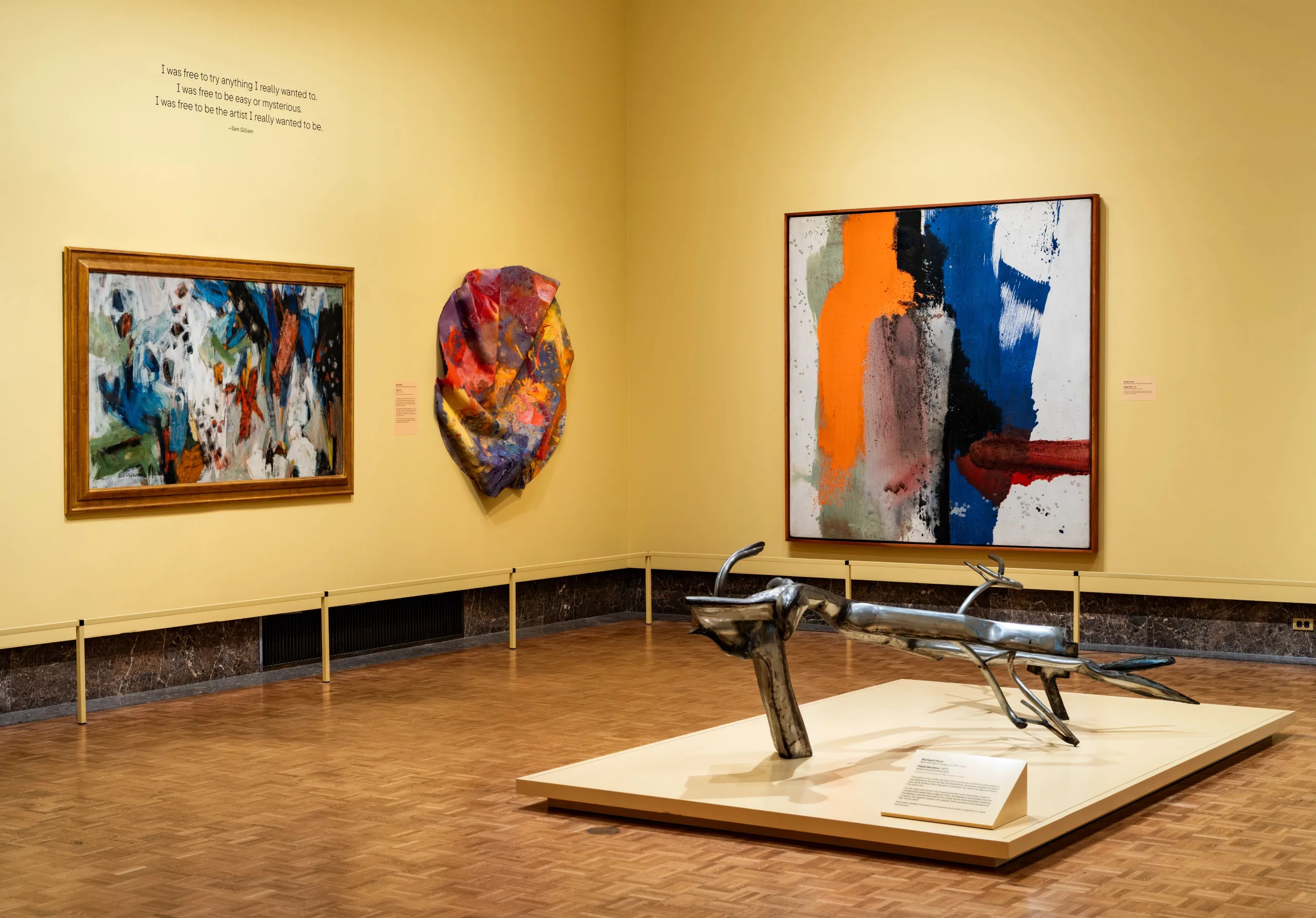
Sam Gilliam’s Gram, middle, and Edward Clark’s Maple Red, upper right
Talk about one recent acquisition that visitors can see in the new galleries, and why it’s important to you.
Stevedore, a bronze statue of a dock worker by Richmond Barthé, was acquired by the DIA in 2024 and is on view for the first time. As an important sculptor of the Harlem Renaissance, Barthé depicted everyday Black subjects like Stevedore as beautiful and powerful. The muscular laborer balances himself on a steel beam, holding a cable in one hand and a hat in the other. Many saw working-class laborers as American heroes who were going to save the country and lift us out of the Great Depression.
The sculpture was very dear to Barthé; he always kept this work close to him throughout all his moves. That just makes me appreciate it more.
The original Stevedore by Barthé was created in 1937, but this one was cast in 1986. Barthé didn’t have a pension, which caused his patrons and friends to worry about him. One of Barthe’s good friend, art historian and artist Samella Lewis, helped him to select a few works for additional limited castings, which supported him until his death in 1989.
What do you hope visitors will carry with them after seeing these galleries?
I want visitors to realize there’s a history to African American art. These artists were working in the 18th century, and some even earlier. African American history isn’t taught enough in schools. I’ve studied so much art history in my life—I received my undergraduate degree at New York University and my graduate degree at Harvard—and I’ve never had a course on African American art.
I didn't learn African American art history until I worked at the Studio Museum in Harlem. I studied German Expressionist art in graduate school because it’s so modern and expressive. For me, studying African American art wasn’t an option back then because it wasn’t offered.But I don’t think of these two traditions as foreign from one another. African American painters like Vincent Smith admired German Expressionism, and you can see that influence in his painting The Fire Next Time, on view in the new galleries.
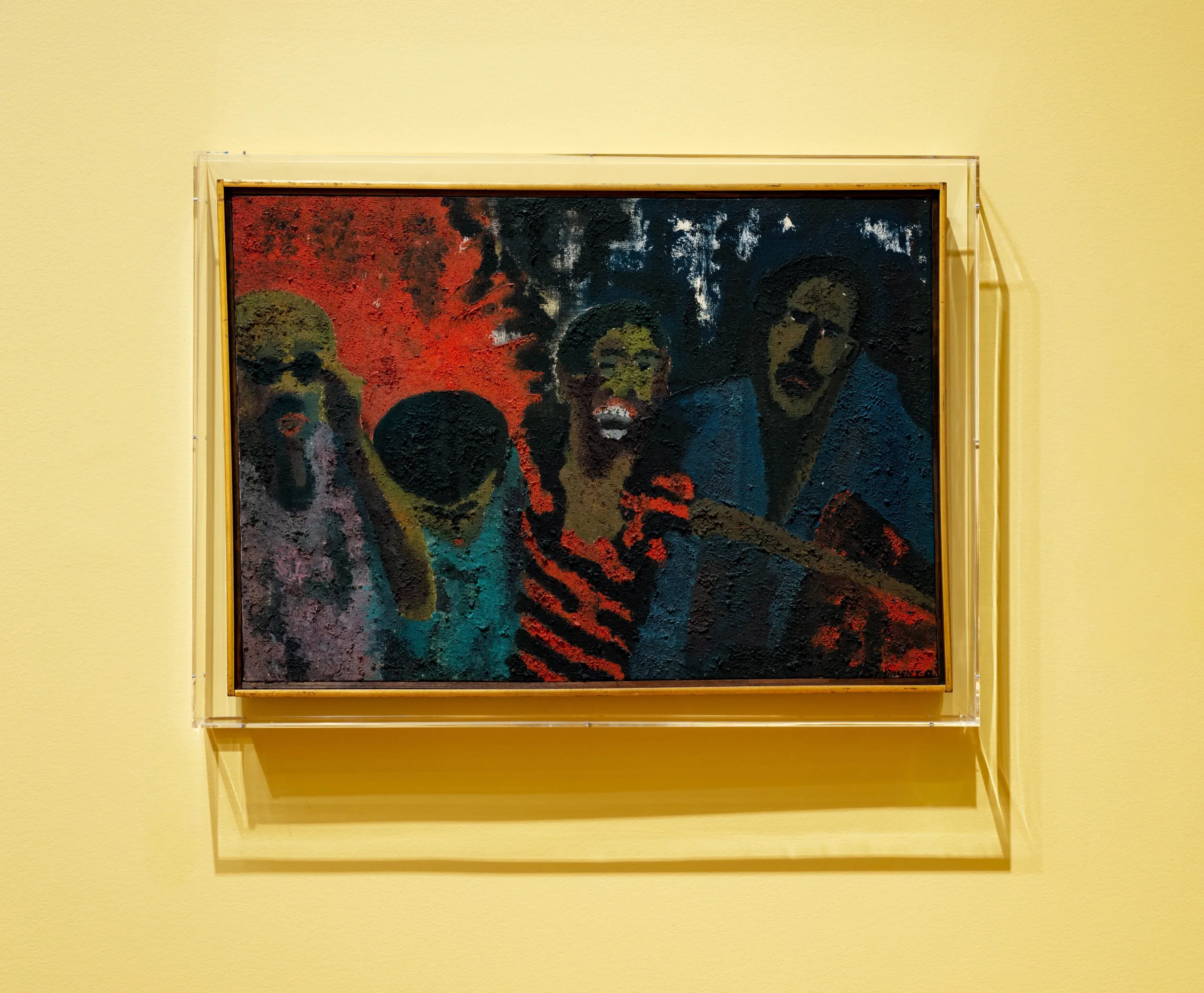
Vincent Smith, The Fire Next Time, 1968. Detroit Institute of Arts,
Museum Purchase, W. Hawkins Ferry Fund